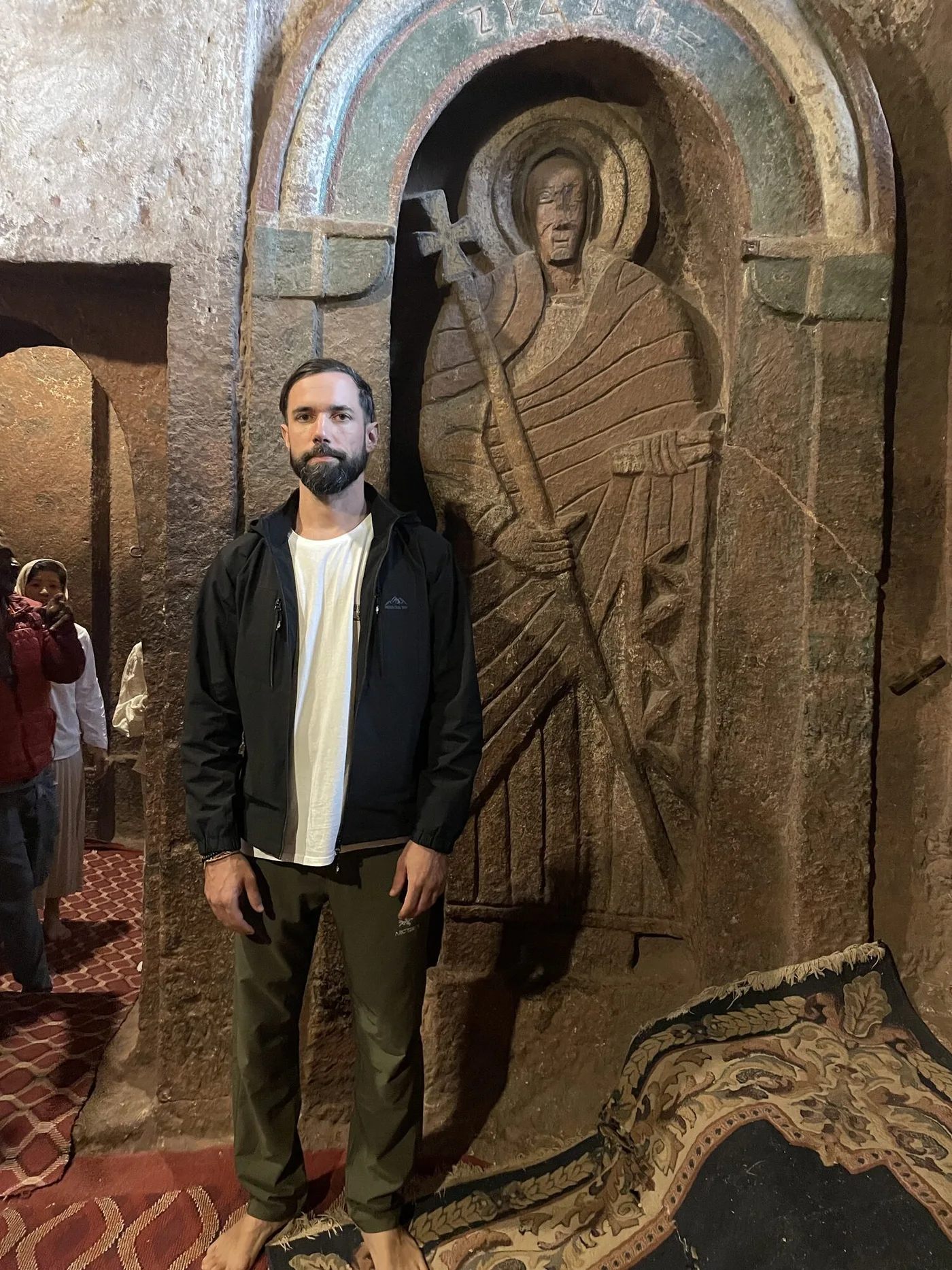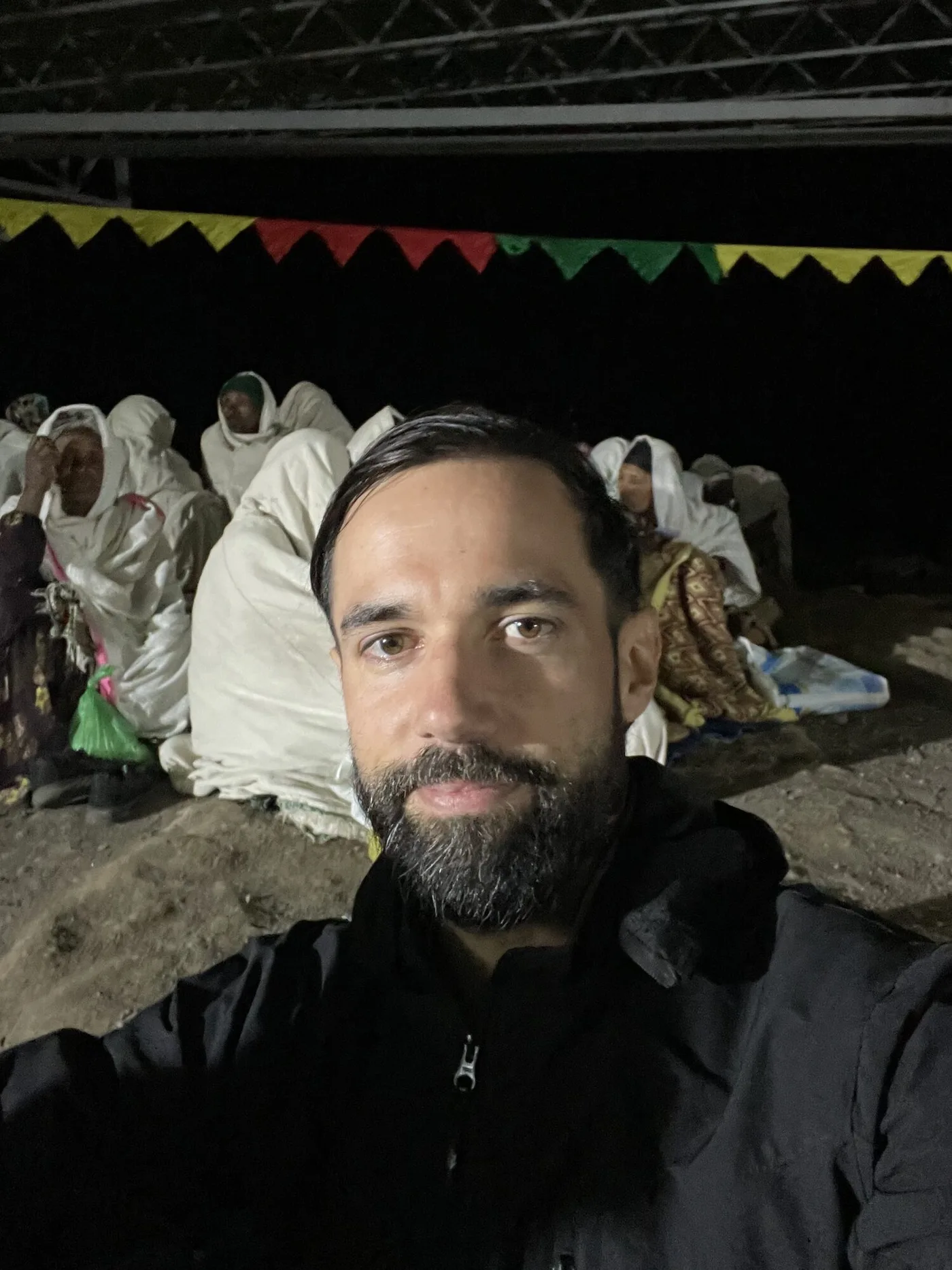
I hadn’t planned to go to Lalibela. I arrived during the Meskel celebrations and joined the all-night vigil. People were wrapped in white, praying through the darkness. Children slept against their parents. Elders leaned on prayer sticks. I slept in the church with them.
On my first day, I prayed to God and Jesus for guidance and the courage to keep opening my heart. For years I’ve tried to follow Jesus’ wisdom as a model of love, outside a formal religious structure. Being there made that very concrete for me.
What I remember most is spending time with people. Praying, eating, laughing, waiting together. People made room for me in something that was already part of their lives. I felt grateful to be included.
Why I made the website
As a tourist, I often feel uncomfortable with how much I spend on flights and hotels compared with how little reaches the people I meet. It’s easy to travel a long way and stay inside a fairly expensive bubble. In Lalibela, I had a chance to get outside it.
I spent time beyond the usual church visit and helped with some school supplies. The friendship and care I received felt much larger than what I gave. I didn’t arrive with a charity project, and I don’t want to turn the visit into a story about me saving anyone.
I did want to keep sharing the place after leaving. Building a website was something I could contribute. I wanted a visitor to find more than a beautiful photograph: enough context to understand what they were looking at, practical information to spend time in town, and ways to work directly with local people.
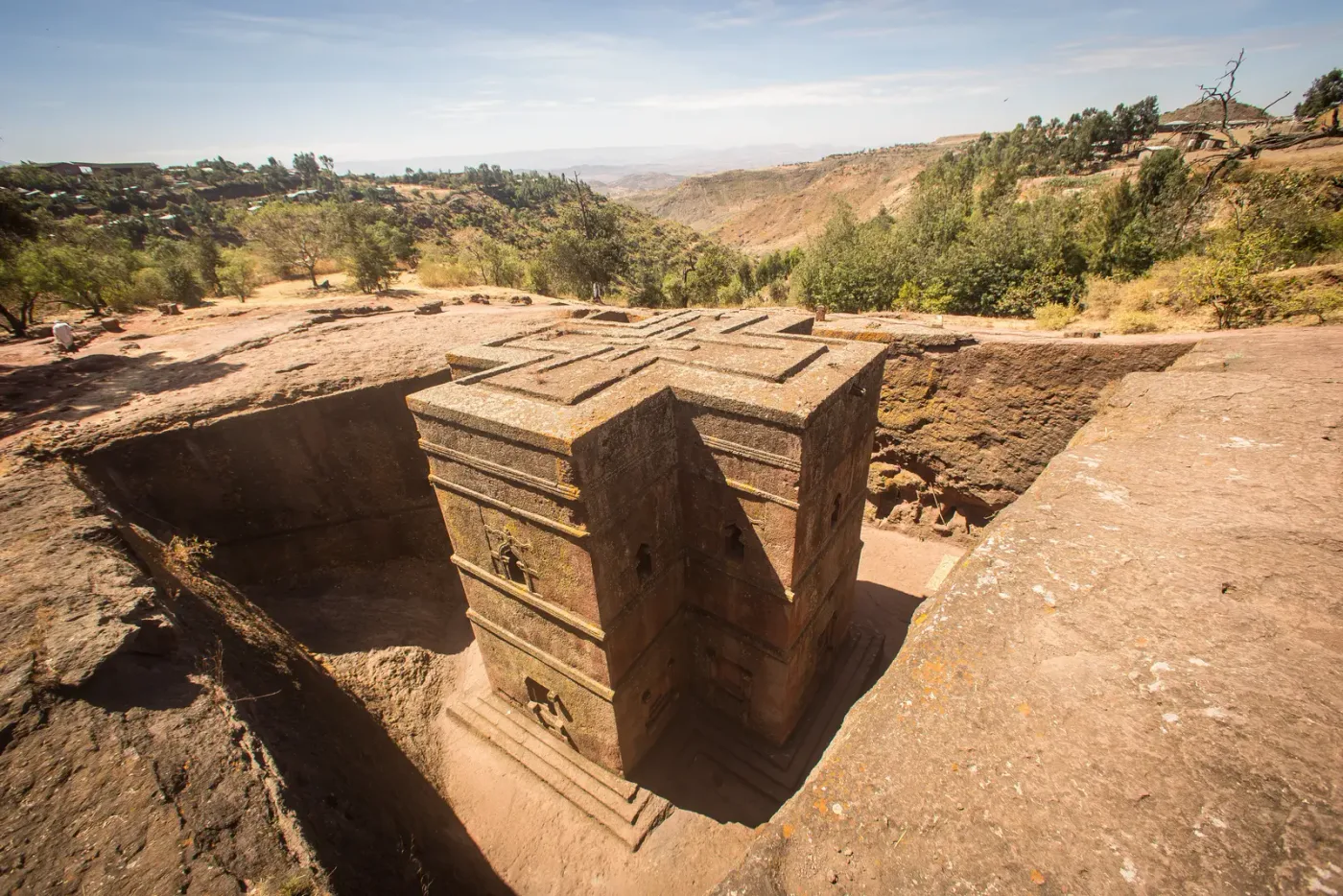
That is how the Lalibela guide grew. It covers the rock-hewn churches, religious life, the surrounding highlands, and the practical questions involved in a visit. The churches are still places of worship. Understanding that changes how you approach them.
Useful after the story ends
The guide includes local people and businesses, alongside the history and photographs. It also has a support guide about keeping spending local and checking how any giving is organised. A personal connection is a good reason to care. It doesn’t remove the need to ask who makes decisions, where money goes, or what happens afterwards.
I’m sharing my experience as a visitor. The people who live there know far more than I do, and I want the site to help readers find that knowledge.
If you’re curious about the place, start with the photographs and the church guide. My longer account, I Didn’t Come to Save Anyone, is there too. For a possible trip, use the site’s practical planning pages and check current conditions before making plans.